About
I am a Ph.D. student in Computer Application Technology at the University of Chinese Academy of Sciences, advised by Prof. Xue Wan. My training unit is the Technology and Engineering Center for Space Utilization, Chinese Academy of Sciences.
My research focuses on embodied agents, multimodal perception, and simulation-to-real robot validation.
Education
- 2023.09 - Present — Ph.D., Computer Application Technology, University of Chinese Academy of Sciences; expected graduation: December 2026.
- 2020.09 - 2023.06 — M.S., Computer Application Technology, University of Chinese Academy of Sciences.
- 2016.09 - 2020.06 — B.E., Department of Automatic Control, Nanjing University of Aeronautics and Astronautics.
Internship Experience
Morphi Robot
May 2026 - August 2026 · Embodied Intelligence Intern
- Designed and implemented tool-calling, intent-understanding, and task-management modules for an embodied-agent system.
- Evaluated the agent in the Isaac Sim Behavior 1K environment, achieving a 75.3% task completion rate.
- Built a household service scenario in Isaac Sim with 45 atomic actions and 37 scene objects, supporting 20-minute long-horizon task validation.
- Converted the Python implementation to an edge-side C++ version on the real robot and conducted deployment tests.
Honors and Awards
- 2025.11 1st Place, UCAS Graduate Forum, Aerospace Session.
- 2025.10 2nd Place + Innovation Solution Award, IROS 2025 RoboSense Challenge (team leader).
- 2024.03 1st Place, CVPR 2024 SPARK Spacecraft Pose Estimation Challenge (team member).
- 2024.03 4th Place, CVPR 2024 SPARK Spacecraft Part Segmentation Challenge (team leader).
- 2023 Authorized invention patent on intelligent in-orbit exposure and focus control for space cameras.
- 2016-2020 National Encouragement Scholarship; GPA 4.0/5.0; 2nd Prize in Jiangsu Undergraduate Electronic Design Contest; 1st Prize in NUAA Electronic Design Contest.
Selected Work
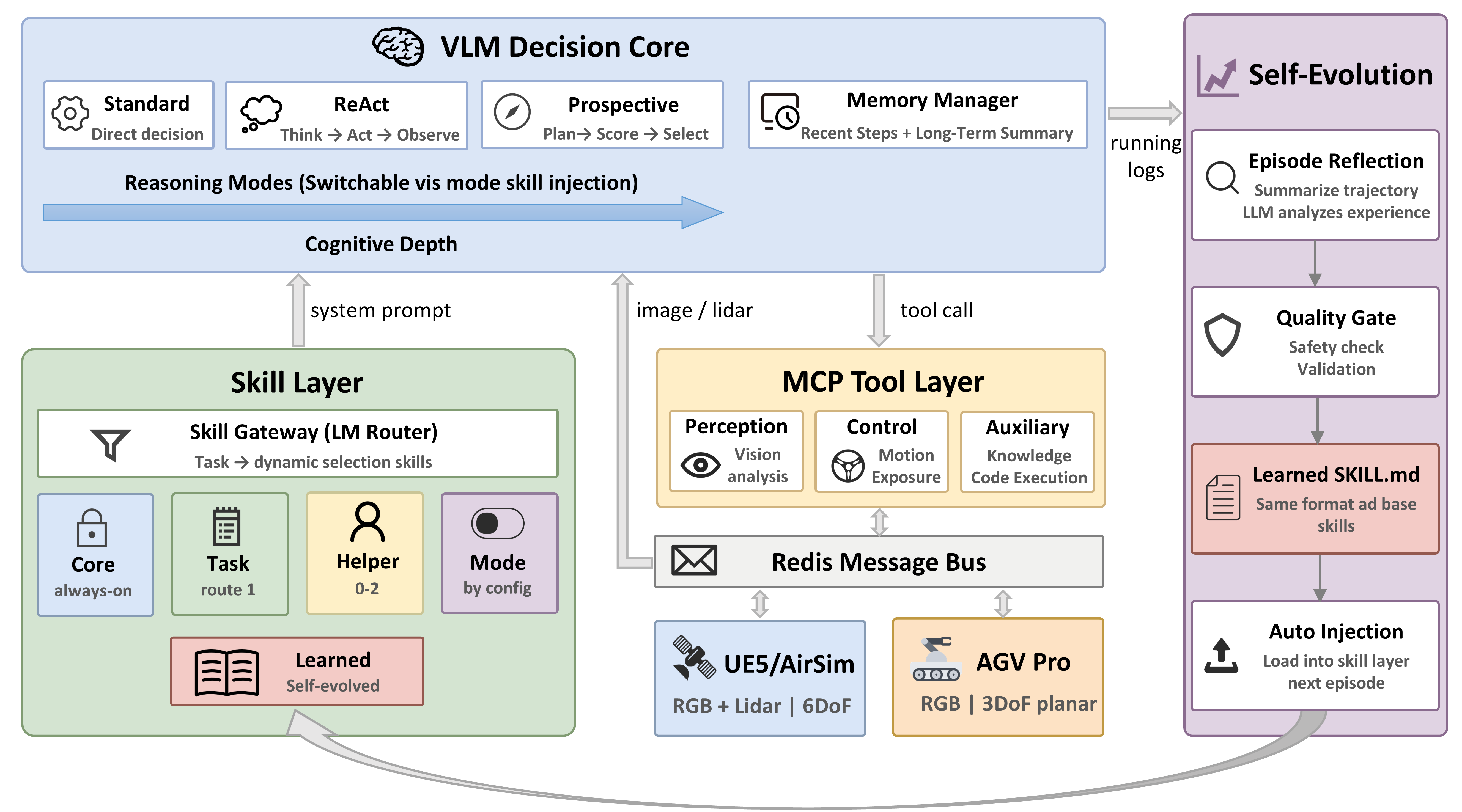
SpaceMind: A Modular and Self-Evolving Embodied VLM Agent for Autonomous On-orbit Servicing
Aodi Wu, Haodong Han, Xubo Luo, Ruisuo Wang, Shan He, Xue Wan.
- Modular VLM-agent framework that decomposes skills, MCP tools, and reasoning into three independently extensible dimensions.
- Three switchable reasoning modes (Standard / ReAct / Prospective) with skill self-evolution that turns failed episodes into reusable skills.
- 192 closed-loop runs across 5 satellites, 3 task types, 2 environments; the identical codebase transfers from UE5 simulation to a physical robot lab with 100% rendezvous success.
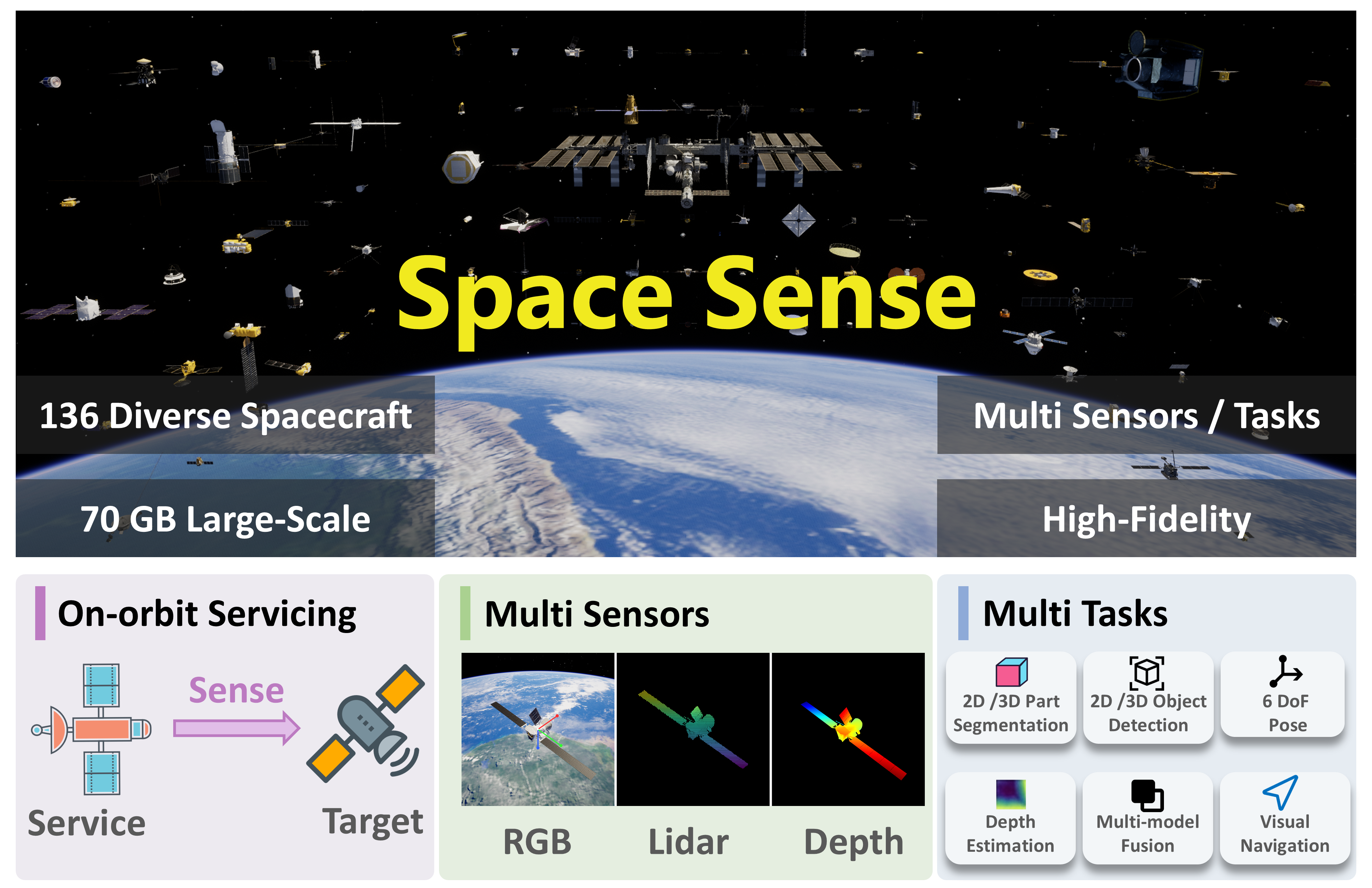
SpaceSense-Bench: A Large-Scale Multi-Modal Benchmark for Spacecraft Perception and Pose Estimation
Aodi Wu, Jianhong Zuo, Zeyuan Zhao, Xubo Luo, Ruisuo Wang, Xue Wan.
- 136 satellite models with around 70 GB of time-synchronized RGB (1024x1024), depth, and 256-beam LiDAR data built in Unreal Engine 5.
- Dense 7-class part-level semantic labels at both pixel and point level, plus accurate 6-DoF pose ground truth.
- Supports six tasks: 2D / 3D detection, 2D / 3D segmentation, depth estimation, 6-DoF pose, multi-modal fusion. HuggingFace downloads 2700+.
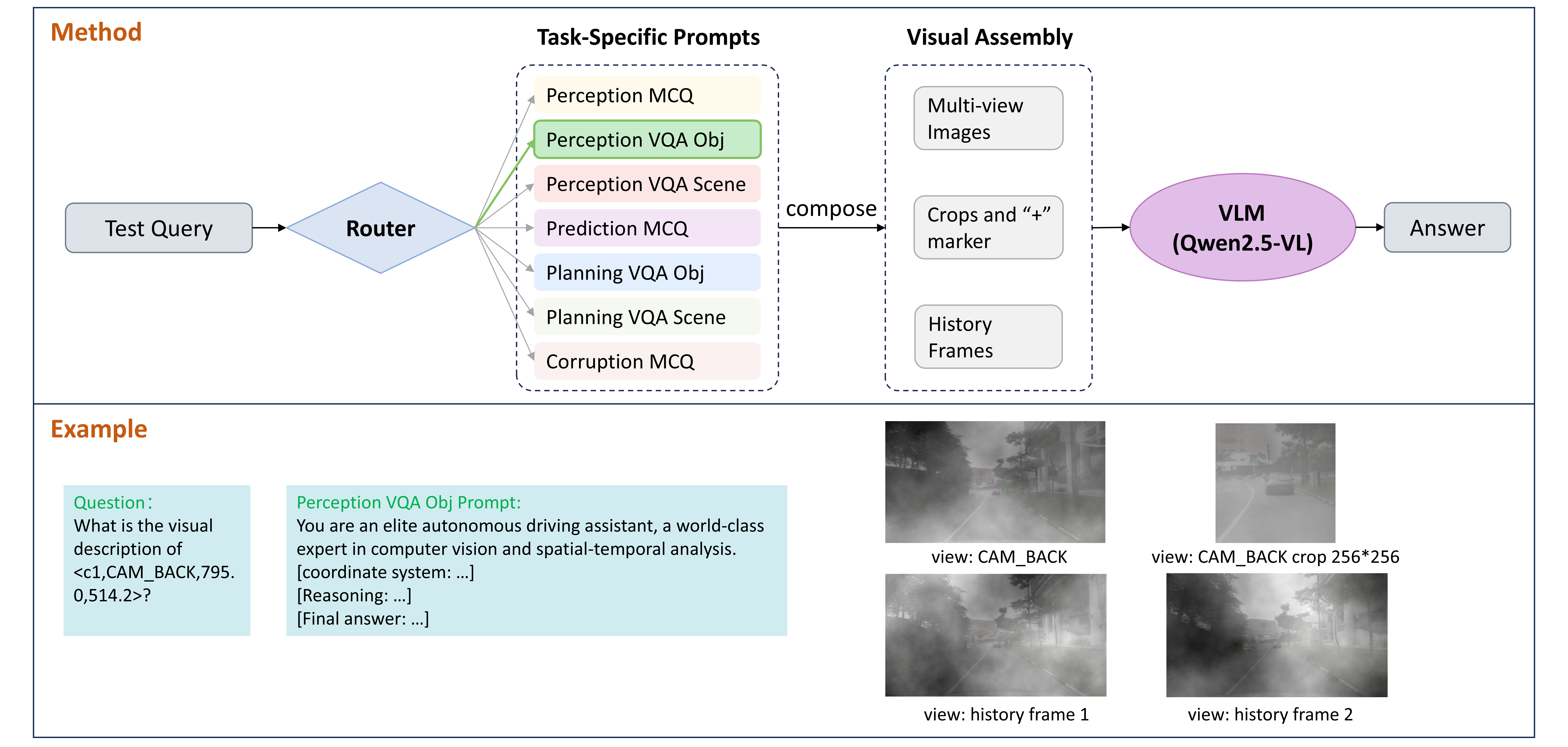
Enhancing Vision-Language Models for Autonomous Driving through Dynamic Routing and Spatial Reasoning
Aodi Wu, Xubo Luo. IROS 2025 RoboSense Challenge Technical Report.
- Dynamic routing module that dispatches each question to a task-specific expert prompt, eliminating cross-task interference.
- Explicit multi-view coordinate grounding plus Chain-of-Thought / Tree-of-Thought reasoning to fix BACK-camera and left-right confusion.
- 70.87% on Phase-1 clean data and 72.85% on Phase-2 corrupted data with Qwen2.5-VL-72B; 2nd place overall and Innovation Solution Award.
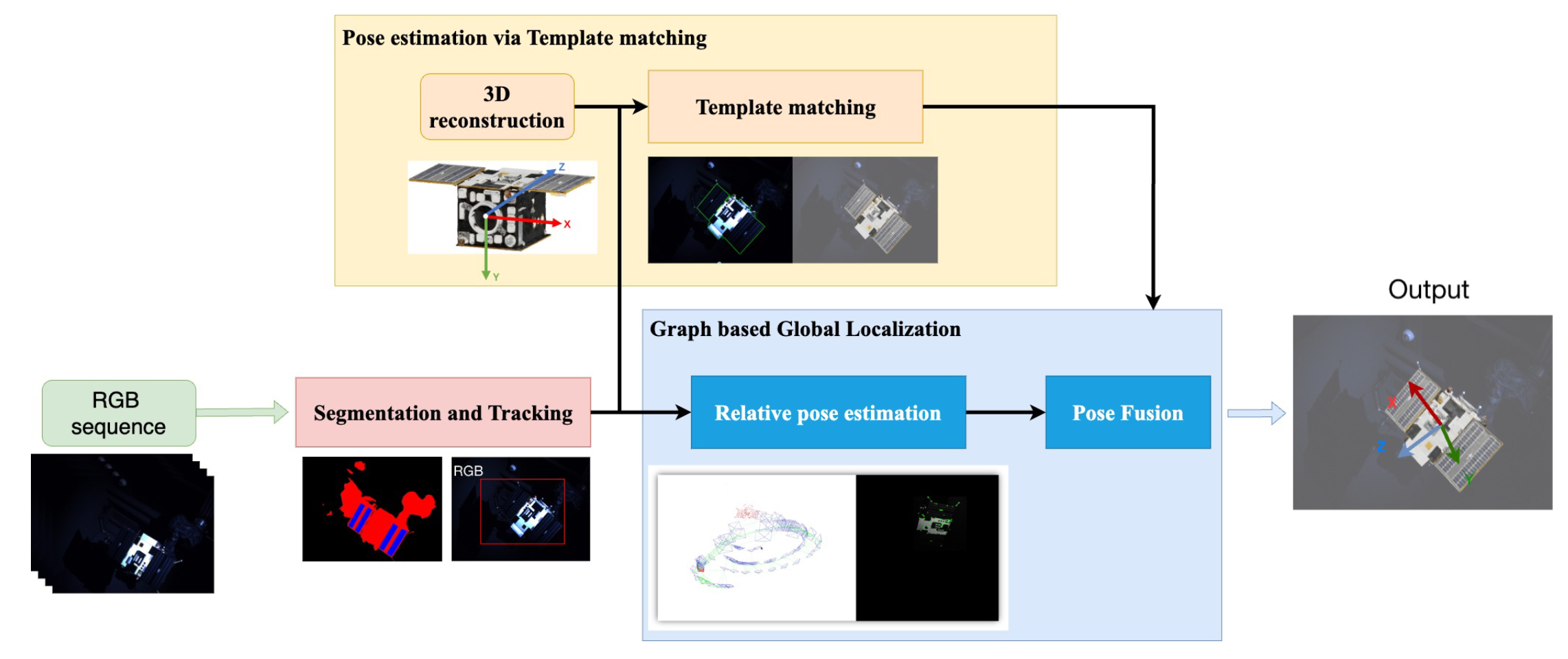
CVPR 2024 SPARK Challenge — Non-cooperative Spacecraft Perception
Spacecraft pose estimation and part segmentation on synthetic and real satellite imagery.
- Pose estimation track — 1st place (team member).
- Part segmentation track — 4th place (team leader).
- Integrated multiple segmentation algorithms with depth estimation, and fused absolute and relative localization on the SPARK 2024 dataset.
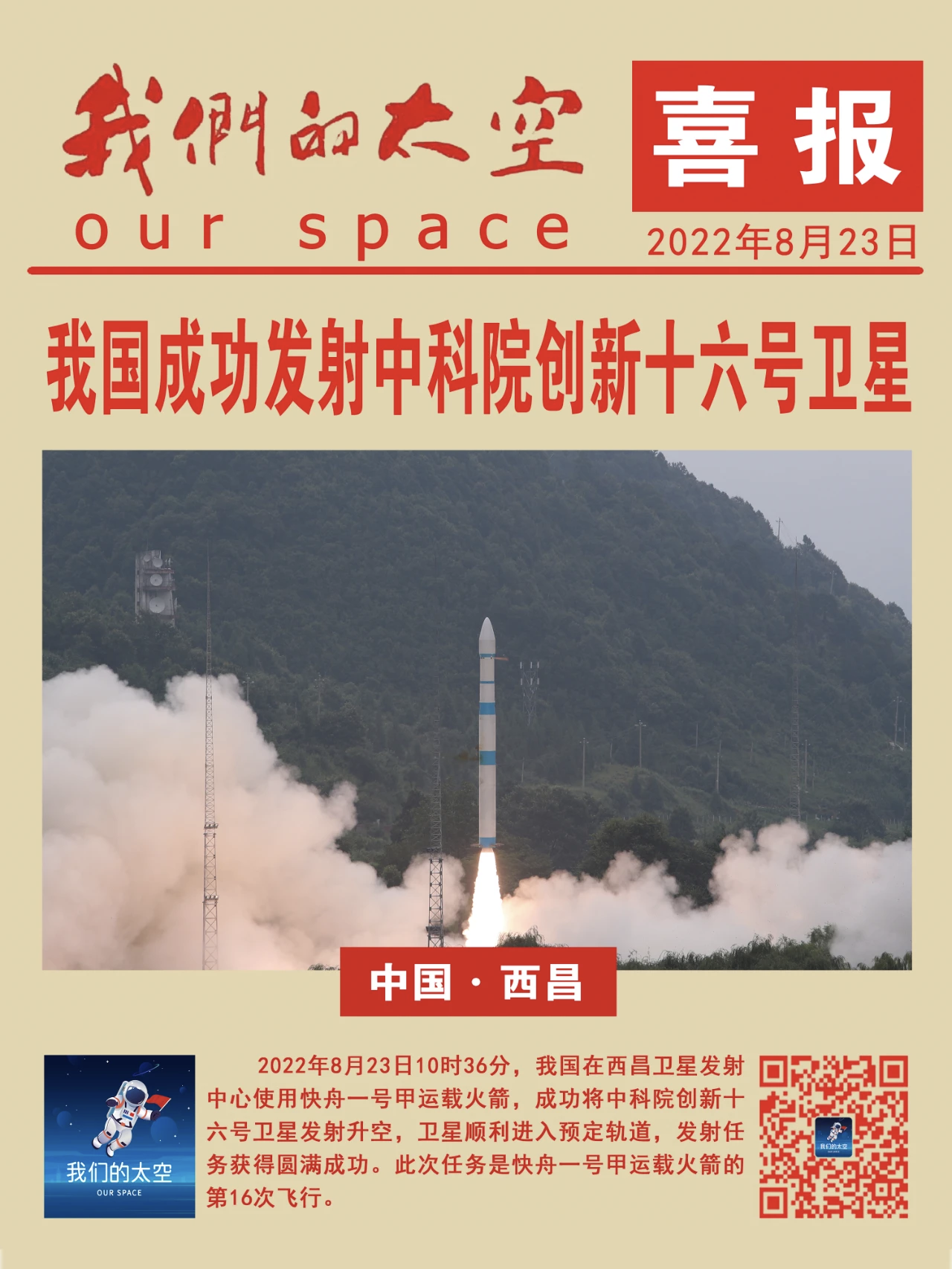
DaVinci On-orbit Servicing Satellite — Camera Control, Visual Perception, and Monocular Navigation
Led camera exposure/focus control, visual perception, and monocular navigation, from algorithm research to software-hardware integration and launch support.
- Cross-domain spacecraft component segmentation with edge-consistency generative networks, robust to synthetic-to-real domain gap.
- Intelligent on-orbit exposure and focus control for space cameras, granted as an authorized invention patent (2023).
- Monocular relative navigation for non-cooperative spacecraft over 200 m to 10 m, 5.16% mean error at 10 FPS on NVIDIA TX2, deployed on-orbit.
Featured Demos
关于我
我是 中国科学院大学 计算机应用技术博士生,导师为万雪研究员,培养单位是 中科院空间应用工程与技术中心。
研究方向关注 具身智能体、多模态感知 与 仿真到真机验证。
教育经历
- 2023.09 - 至今 — 博士,中国科学院大学,计算机应用技术,预计 2026.12 毕业。
- 2020.09 - 2023.06 — 硕士,中国科学院大学,计算机应用技术。
- 2016.09 - 2020.06 — 本科,南京航空航天大学,自动控制系。
实习经历
墨奇智能
2026.05 - 2026.08 · 具身智能实习生
- 负责具身 agent 系统工具调用、意图理解、任务管理模块的设计与实现。
- 在 Isaac Sim 的 Behavior 1K 环境中验证智能体效果,任务完成度达 75.3%。
- 在 Isaac Sim 中搭建家庭服务场景,支持 45 个原子动作、37 个场景对象和 20 分钟长程任务验证。
- 在真机上实现 Python 转端侧 C++ 版本,并完成部署测试。
荣誉与奖项
- 2025.11 冠军,国科大研究生论坛航空航天分论坛。
- 2025.10 亚军 + 创新解决方案奖,IROS 2025 RoboSense Challenge(队长)。
- 2024.03 冠军,CVPR 2024 SPARK 航天器位姿估计挑战赛(队员)。
- 2024.03 第 4 名,CVPR 2024 SPARK 航天器部件分割挑战赛(队长)。
- 2023 获 空间相机在轨智能曝光与对焦控制 国家发明专利授权。
- 2016-2020 国家励志奖学金;GPA 4.0/5.0;江苏省电赛二等奖(无线充电小车爬坡);南航校电赛一等奖(单片机编程)。
代表性工作
基于动态路由与空间推理的自动驾驶 VLM 增强方案
武奥迪, 雒勖博. IROS 2025 RoboSense Challenge 技术报告.
- 动态路由模块:把每类问题分发到对应专家提示,消除任务间提示干扰。
- 显式多视图坐标系建模 + Chain-of-Thought / Tree-of-Thought 推理,修正后视相机与左右方位混淆问题。
- 基于 Qwen2.5-VL-72B,Phase-1 干净数据 70.87%,Phase-2 受扰数据 72.85%,最终总成绩亚军,并获创新解决方案奖。
CVPR 2024 SPARK 挑战赛 —— 非合作航天器感知
面向仿真与真实卫星图像的航天器位姿估计与部件分割。
- 位姿估计赛道:获得第 1 名(队员)。
- 部件分割赛道:获得第 4 名(队长)。
- 在 SPARK 2024 数据集上集成优化分割算法与深度估计,融合绝对定位与相对定位导航。
达芬奇空间在轨服务卫星——相机控制、视觉感知与单目导航
负责相机曝光对焦控制、视觉感知与单目导航,从算法研发到软硬件集成与发射保障。
- 基于边缘一致性生成网络的跨域航天器部件分割,缓解仿真到真实的域差。
- 空间相机在轨智能曝光与对焦控制方法,已获国家发明专利授权(2023)。
- 非合作目标单目相对导航,200 m–10 m 范围内 5.16% 平均误差,NVIDIA TX2 上 10 FPS,已应用于在轨任务。